Condé Nast
Recasting the world’s foremost publisher into a premium media network.
Condé Nast had been the world’s preeminent magazine publisher for a century. By 2020, that was the problem.
The magazine business model had been entirely commoditized by the platforms. The luxury houses Condé had defined for generations were going direct to consumer. And the ad business the entire industry relied upon for their entire lives was waning rapidly. The original ask was a rethinking of the brand positioning for many of the titles, but the framing was wrong. The competitive set Condé Nast measured itself against — Hearst, Meredith, the other large publishers — was the wrong set. The actual competition for premium time and attention now included Apple, Netflix, Disney, and the luxury houses themselves. For a portfolio of 26 distinct global titles, each operating as a stand-alone brand fending for itself, the carrying cost of independence was too great to bear for all but the best of them. And, collectively, they failed to capture the value of being one of the most powerful editorial institutions in the world.
The work that followed wasn’t a brand refresh. It was an argument to the executive committee that Condé Nast wasn’t a publisher anymore — that it needed to become a category that didn’t yet exist, defined at the intersection of premium quality and category authority, structurally distinct from both the media conglomerates and the luxury houses.
A premium media network.
Brand strategy was the instrument. The work was the architecture of the business, leveraging something neither media networks nor luxury houses alone could replicate: a portfolio of brands that were each authorities in their categories, taken seriously by the readers and the industries those readers shaped. That authority, accumulated over a century and distributed across 26 titles, was the asset. The business model had to be built around it.
A two-axis framework — Quality and Authority — gave the strategy its structure. Quality was the easy axis; most premium positioning work claims it. Authority was the harder one, and the more important: specific knowledge, expert judgment, the discrimination of subtleties that distinguishes the connoisseur from the consumer. Plotted against this framework, the luxury houses occupied the upper half. The media conglomerates occupied the lower half. Condé’s strongest brands — Vogue, The New Yorker — sat in the upper-right quadrant alone. The portfolio’s challenge was to bring every brand into that quadrant or to subordinate it to one that already was.
That principle produced a tiering system. Twelve anchor brands, four of which functioned as halo brands — Vogue, The New Yorker, Vanity Fair, GQ — capable of extending equity across the rest of the portfolio. Core brands with clear, distinct authority that received support from above and below. Support brands whose role was to feed and reinforce a masterbrand rather than fight for independent authority. The work was honest in a way most portfolio strategy isn’t: it told certain editorial directors that their brands would operate in service of others, and made the strategic case for why that was a stronger position than continued independence.
Working in close partnership with the global editorial leadership of each title — including Anna Wintour at Vogue, David Remnick at The New Yorker, Will Welch at GQ and all of their peers across the portfolio — the work translated this architecture into operating positionings each editor could recognize as true. The authority on the music you’ve not yet heard. The authority on the world’s exceptional travel experiences. The honest authority on what really matters in culture. The authority on tomorrow, at the intersection of technology, society, and culture. Twelve sentences, each load-bearing, each capable of holding the strategic weight of an entire title without compromising the editorial sensibility that made it valuable in the first place.
Underneath, a flywheel. Attract the best talent by championing editorial excellence. Publish the best work by promoting quality and rewarding expertise. Captivate the best audience by inviting them to become the best editors of the future. Command the best margins by requiring membership, facilitating mentorship, and sourcing rarity. The flywheel compounded. The halo of legitimacy from the four anchor brands extended down through the portfolio. The accumulated benefits of the network — navigation, amplification, leverage, scale — created the gravity to pull in partnerships that brands acting alone couldn’t have attracted. The model that emerged was less like a magazine company and more like the way Goldman Sachs partnered with Apple to build the Apple Card: brands that wouldn’t have entered the room individually had reason to enter together.
The strategy sold through to the executive committee. The architecture became the operating model. The digital brand book — navigable by title, distinct in voice for each — translated the framework into something the global editorial leadership could work from and the broader organization could implement. Two years later, the Condé+ initiative extended the brand work into editorial strategy, building the cross-portfolio content layer the architecture had been designed to enable.
What this work proved, more than anything specific to Condé Nast, was that at certain altitudes brand strategy and editorial sensibility become the same craft. To articulate the operating positioning of 26 distinct editorial voices is to work in a register where the language of brand and the language of editing are inseparable. You cannot do the first credibly without the second. And the strategic move that mattered most — convincing a century-old institution that the category it had defined no longer described what it was — required the kind of editorial fluency that lets you tell an editor something true about their own work that they had not yet articulated.
The fluency of authority is what the work was actually about. The brand architecture was the resulting artifact.
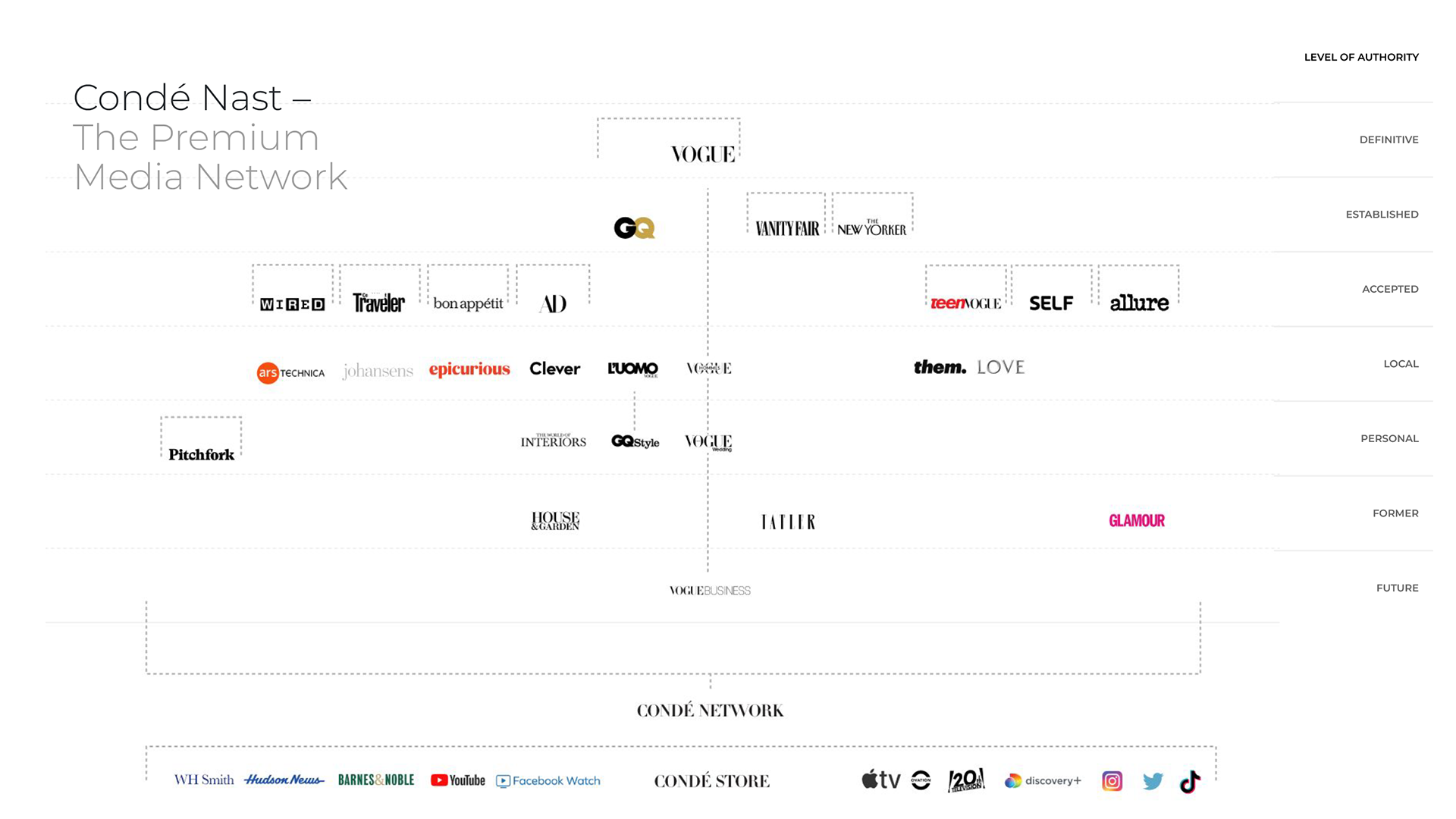
The network architecture that became the operating model — a portfolio of authorities, organized around shared infrastructure and amplification, rather than competing for share of voice.
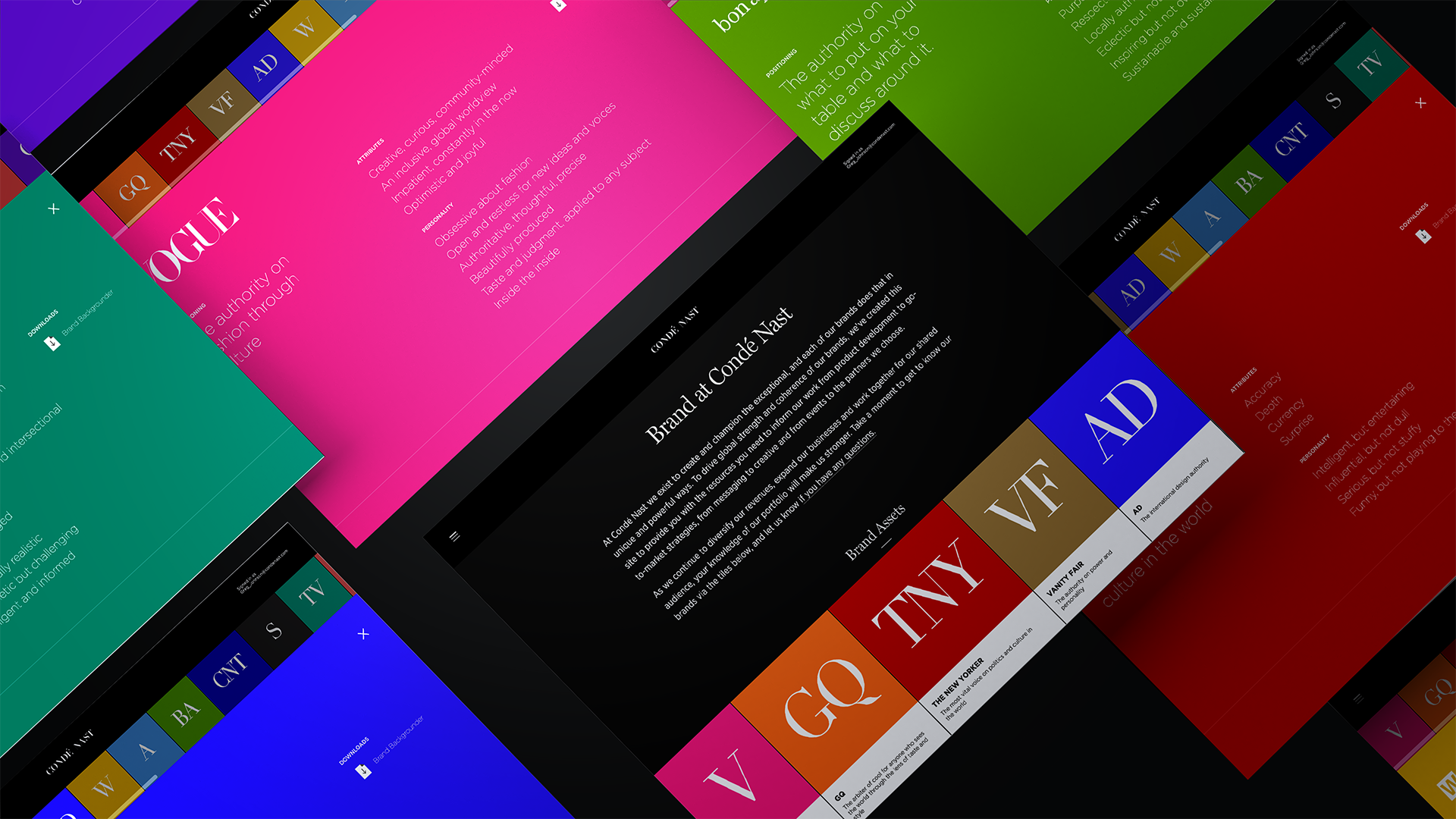
The brand architecture map — twelve anchor brands, four of which functioned as halo brands, with core and support brands positioned in relation to them.
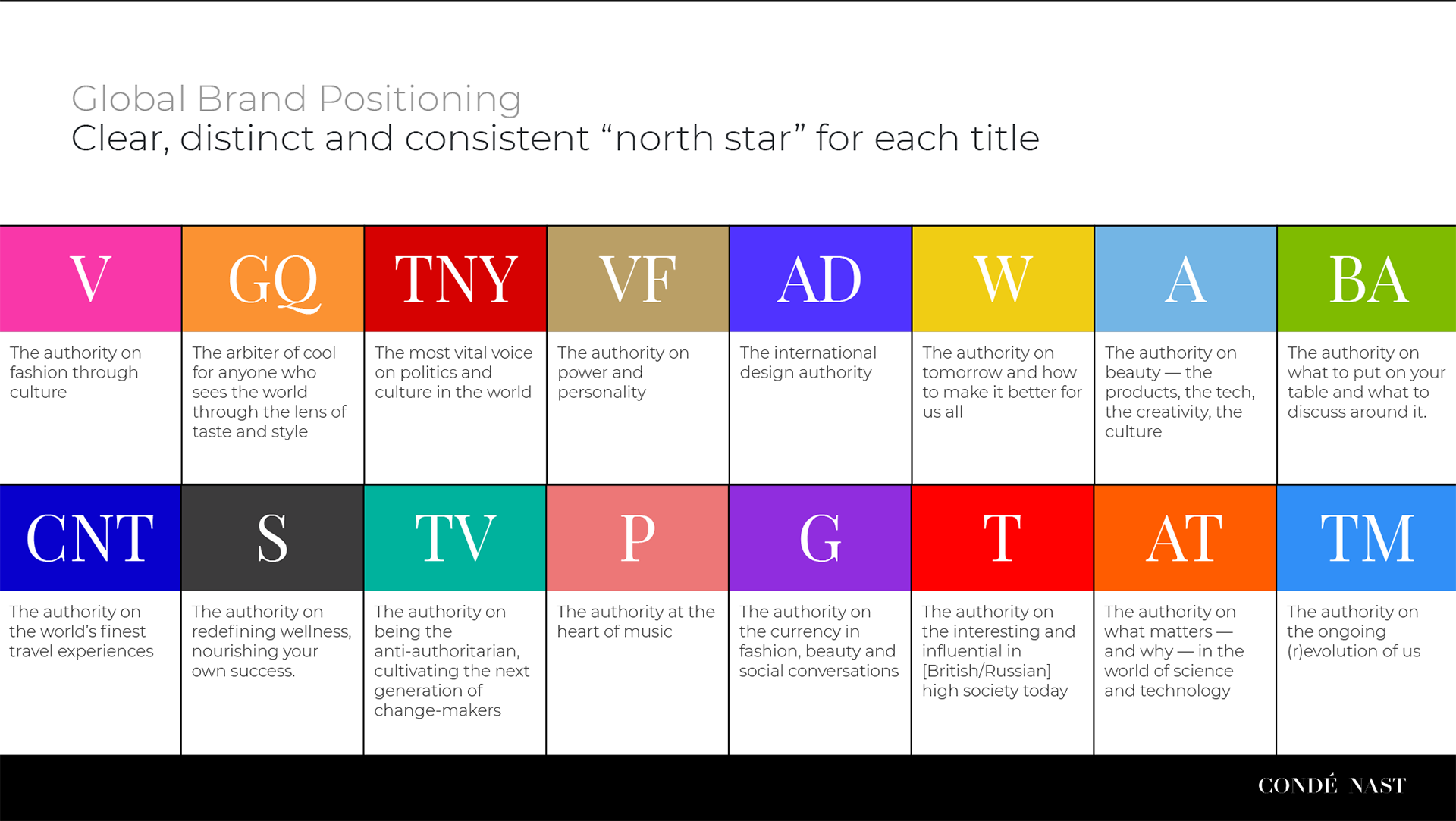
Operating positionings translated into language each editor could recognize as true — twelve sentences, each load-bearing.

A consistent typographic system across the portfolio, anchoring the network identity without overriding each title's distinct editorial voice.
