Stitch Fix
From transactional retailer to continuous style platform.
The brand we had — and the next version of it we’d been about to ship — weren’t meeting the needs of the business.
By 2019, Stitch Fix had a problem. Word-of-mouth and Facebook ads had built a thriving business, but the engine that had powered the company’s first decade was running down. Brand awareness was strong, but viral consideration had collapsed. The offering was genuinely differentiated, but consumers no longer understood why it mattered. And the conventional answer — refreshing the brand identity, modernizing the expression, finding a new visual register — was the wrong answer, because the question wasn’t a brand question. It was always a question about the nature of the business.
We’d engaged a global agency partner to deliver a new brand direction, and the work that came back was just another version of the brand we already had. After a few unsuccessful rounds to get back on track, I had to end that partnership. Our timelines, however, didn’t account for a casual restart. So I built a hybrid inside/outside team to fully restart from a different question: not what kind of brand does Stitch Fix need, but what kind of company is Stitch Fix becoming, and what kind of brand would that company require?
Conventional framing put Stitch Fix in the retail category, alongside Macy’s, Nordstrom, Old Navy, Target, Amazon. Personalization through self-selection, occasional purchase against need, product-led acquisition. That was the world the brand had been built for and the world the original creative direction was optimized for. It was also the world Stitch Fix was structurally trying to leave.
A simple 2x2 positioning framework revealed the whitespace between us and the competitive set: moving along the lines of both personalization and frequency. The retail players clustered in the lower-left and middle of the chart. The upper-right quadrant, being fully personalized, fully continuous, service-based rather than product-based, was occupied by a totally different set of consumer brands. Netflix. Spotify. Facebook’s recommendation engine. These were platforms whose competitive advantage was the continuous relationship with each user, the recommendations that improved over time, the sense that the service knew you and adapted to you. They were also, by 2019, the companies competing for the same time, attention, and consumer loyalty that retail brands had assumed was theirs.
That reframe carried the strategy. If Stitch Fix’s actual competition was Netflix and Spotify, the brand work couldn’t be calibrated to retail conventions. Retailers were selling products. Platforms were selling reasons to believe. Stitch Fix needed to operate as the latter.
The argument extended through a layered diagnostic that mattered to the business leadership. Most companies have a superpower — the thing the organization is uniquely good at that the market values. Disney’s is storytelling. Google’s is data. EA’s is play. Stitch Fix’s superpower was empathy: the combination of human stylists and the data infrastructure that supported them produced an understanding of each client that no pure-algorithm competitor and no pure-retail competitor could replicate. The empathy was the platform’s actual asset. Every other capability — the data science, the inventory, the styling logic — existed to operationalize it. A brand strategy that didn’t lead with empathy was a brand strategy that was selling something other than what the company actually was.
We made a “Three Horizons” argument, borrowing McKinsey’s future orientation model to make it clear not just the type of business we could be today but what mattered the most for the future. Horizon 1 work would optimize the current business. Horizon 3 work would build the platform position alongside Netflix and Spotify. The brand work being commissioned couldn’t be calibrated to H1 alone, because optimizing the current business would harden the conventional retail framing and make the H3 future unreachable. The brand work had to be a multi-horizon instrument: shipping today, but architected to make tomorrow possible.
The reframe that pulled the whole strategy together came from inside the business itself. Styling is the periodic transaction. Style is continuous. That sentence reframed the product. Stitch Fix had been selling styling — boxes, fixes, transactions, occasions. The argument was that Stitch Fix should be selling style — a continuous relationship around discovery and inspiration, insights and recommendations, community, purchase, service and support. Five touchpoints orbiting the client across her life, not one transaction repeated at intervals. That framing justified the platform reframe; it also gave the operating organization a roadmap that didn’t fit into the existing retail playbook.
The new purpose, promise, and positioning followed from there: To guide and inspire people to be their best selves. To truly understand each client to support their constantly evolving style. The only personal style platform that organizes the world of fashion and style continually around me. Three sentences, each load-bearing, each carrying the strategic argument made by the framework underneath them.
Research conducted to validate the strategy uncovered the emotional truth that gave the campaign its voice. Nearly everyone, when asked, had fashion trauma. Stories of dressing rooms and avoided mirrors and the specific shame of looking wrong. Too tall, too short, too curvy, too anything. The vulnerability was almost universal, and almost universally unaddressed by an industry that defaulted to aspirational gloss. The campaign that emerged from that research — Everybody Deserves To Be Seen — was the brand’s first major campaign and the first creative work that operated at the altitude the new strategy required. The work won the 2019 Brandweek Constellation Award.
What this work proved, more than anything specific to Stitch Fix, was that brand transformation is rarely a brand problem. The problems that present as brand problems — softening consideration, blurred differentiation, expression that has stopped landing — are almost always symptoms of a business that has changed shape without redefining what kind of company it is becoming. The brand work that follows can only land if the company is willing to accept a new framing of itself first. Empathy as a superpower. Platform rather than product. Style as continuous, not transactional. Each of these was a business decision before it was a brand decision. The campaign that earned the award was the artifact. The argument was the work.
The strategy was the platform.
The anthem spot broke opening of the 2019 Oscars, giving us a national platform to build a connection. A storybook approach to show the moment that the relationship between stylist and client makes a difference in everyday life. Because, really, We See You.
Everybody Deserves to be Seen, “Molly”
Everybody Deserves to be Seen, “John”
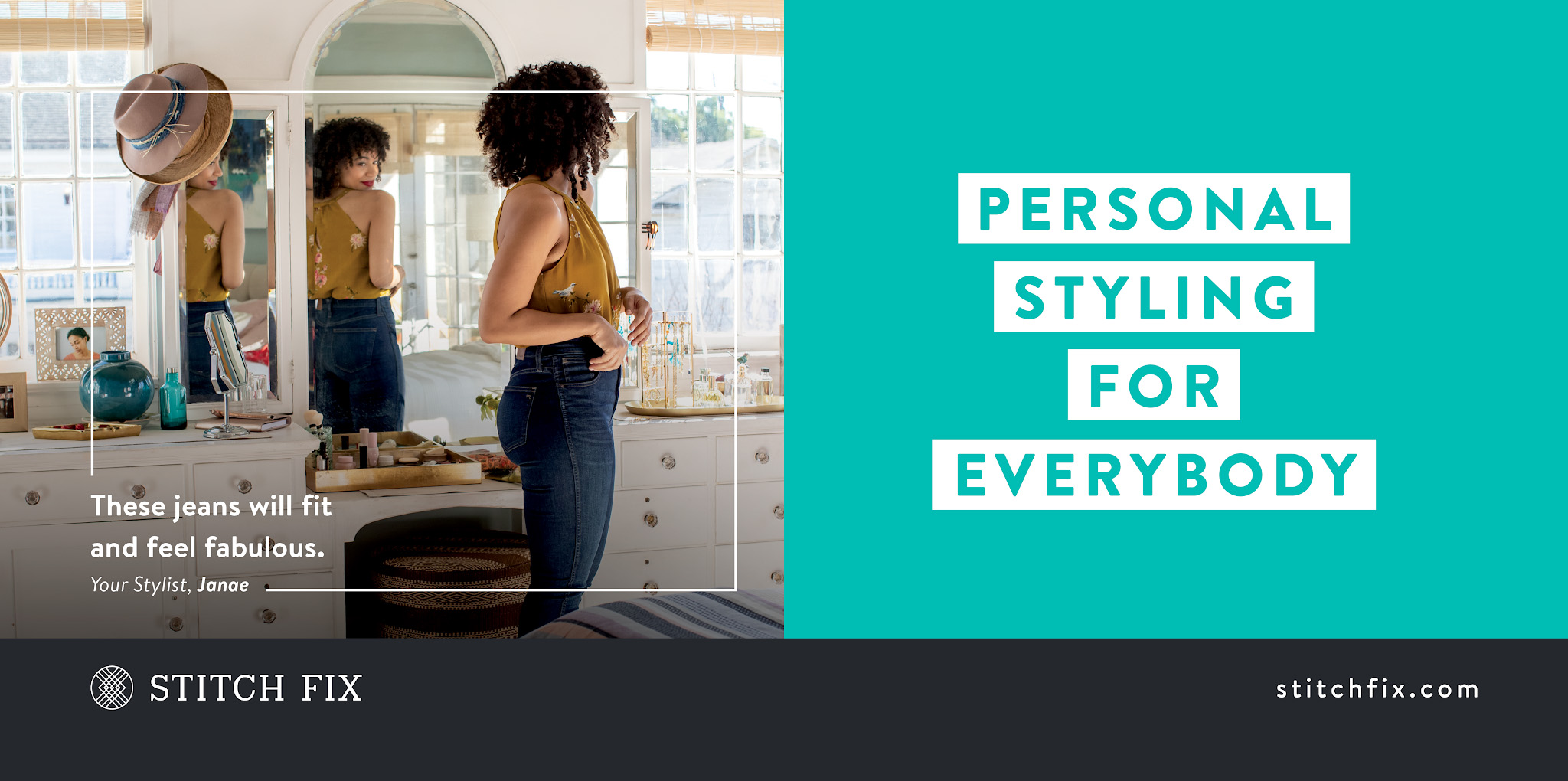
The OOH intended to really celebrate the personal relationship between client and styling, letting that connection tell our story.
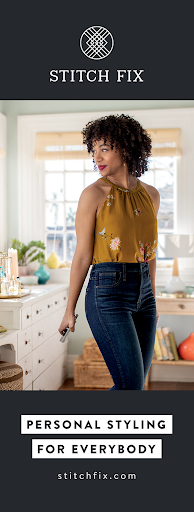
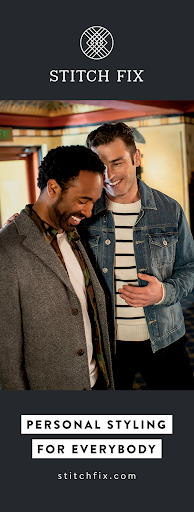
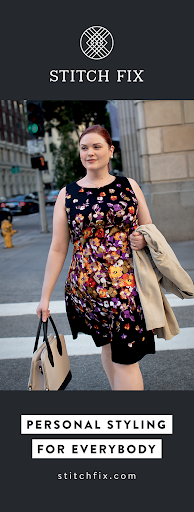
All of our imagery intended to show real bodies, real sizes, real life. Because our success is when we really understand you.
We started working through the next chapter of the brand, shining a light on the most important asset of the business: the bridge we build between us and you.
